Precision Agriculture: Using Technology to Optimize Land Resources
In March 2026, Precision Agriculture (PA) has transitioned from a high-tech niche to the global standard for resource management. As of today, March 9, 2026, the integration of Generative AI agents, autonomous robotics, and centimeter-level GNSS positioning is helping farmers move from “average-field” management to “individual-plant” care.
By leveraging real-time data, precision agriculture ensures that every drop of water and gram of fertilizer is utilized, directly addressing the dual challenges of rising input costs and climate volatility.
1. The Core Technological Pillars of 2026
Modern precision farming is built on an interconnected “digital nervous system” that monitors and responds to field conditions in real-time.
- Generative AI Decision Partners: Moving beyond simple charts, 2026 platforms feature AI agents that act as conversational agronomy assistants. Farmers now ask, “Which hybrid performed best on clay soil under last week’s heat stress?” and receive immediate, data-backed prescriptions.
- Edge-Computing IoT Sensors: Low-power networks (LoRaWAN) now support millions of soil sensors that provide continuous, not periodic, data on moisture, pH, and nitrogen levels.
- Autonomous & Assisted Robotics: Self-driving tractors and robotic weeders (like SwarmFarm) are common on mid-to-large farms. These machines operate 24/7, reducing soil compaction through optimized routing and minimizing labor dependency.
2. Variable Rate Technology (VRT): The Efficiency Engine
VRT is the mechanical backbone of resource optimization. Instead of applying a uniform amount of inputs across a field, VRT adjusts the rate dynamically based on the specific needs of each zone.
- Precision Seeding: Systems now manage individual rows independently, placing seeds at optimal depths and spacing with ±1.5cm accuracy. This has led to 10–15% seed savings and more uniform crop emergence.
- Variable-Rate Irrigation: Connected sensors trigger irrigation events only when soil moisture drops below a specific threshold. This is cutting water usage by 30% in water-stressed regions while boosting yields by up to 15%.
- Smart Spraying: AI-powered sprayers use machine vision to identify weeds and apply herbicides only to the plant, reducing chemical usage by 40–50%.
3. Economic and Environmental Impact in 2026
The shift to data-driven farming is delivering measurable returns for both the checkbook and the planet.
| Metric | 2026 Statistical Impact | Why it Matters |
| Input Savings | $120–$180 per hectare | Reduced waste in fertilizer and pesticides directly improves profit margins. |
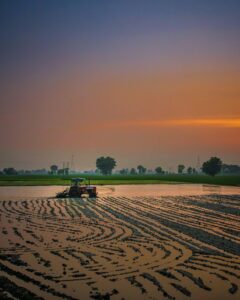
| Yield Increase | 15–25% (paddy/irrigated) | GNSS-based 3D land leveling ensures uniform water distribution and healthier stands. |
| Operational Costs | 22–35% lower TCO | Automation and autonomous systems reduce labor costs and human error over the lifecycle. |
| Sustainability | 80% lower GHG emissions | Precise application reduces nutrient runoff and fuel consumption from optimized vehicle paths. |
4. Navigating the “Digital Transition”
While the technology is more accessible than ever, success in 2026 requires a strategic approach:
- Start with the Fundamentals: Proper land preparation using 3D GNSS leveling provides the highest immediate ROI (15%+ yield gain).
- Focus on Interoperability: Choose systems with Open APIs and ISOBUS compatibility to ensure that hardware from different brands (John Deere, Case IH, etc.) can “talk” to the same farm management software.
- Modular Automation: For mid-sized farms, the trend is toward Task-Specific Robotics (e.g., a dedicated weeding robot) rather than fully replacing entire fleets at once.
AI Peer Insight: In 2026, the most competitive farmers are no longer those who work the hardest, but those who have the best “Connected Intelligence.” Data is now a crop in its own right—if you aren’t harvesting your field data, you’re leaving money on the ground.