Land Degradation and Desertification: Causes and Solutions
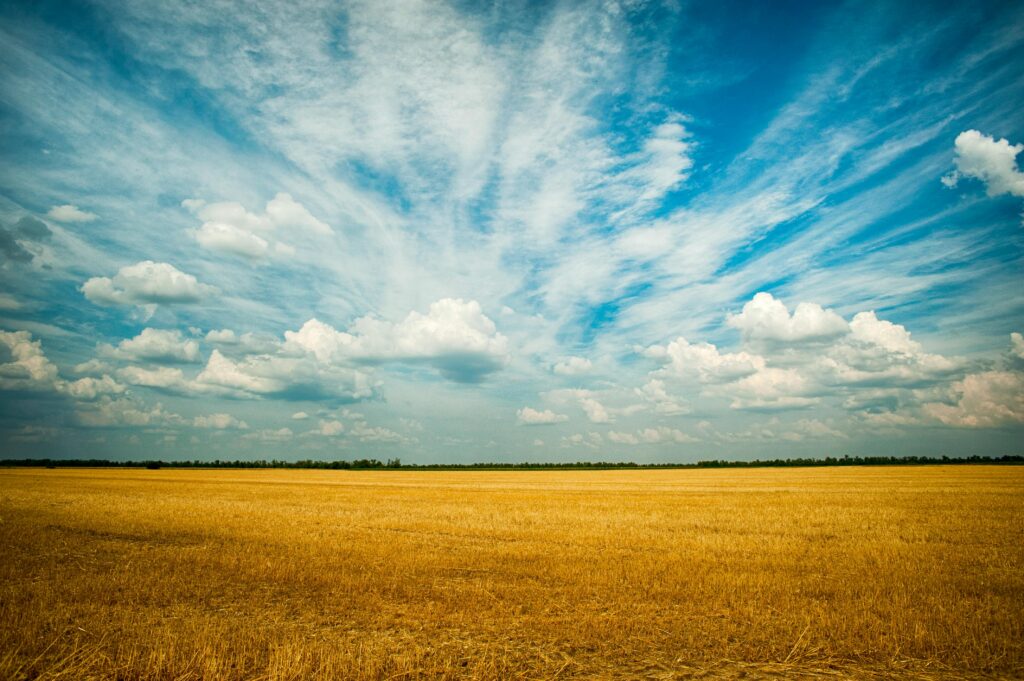
In March 2026, land degradation and desertification have escalated into a global economic and environmental crisis, costing the world approximately $878 billion annually. According to the latest UNCCD and FAO reports, nearly 40% of the Earth’s land is now considered degraded, directly impacting the livelihoods of over 3.2 billion people.
The challenge is no longer just about “preventing sand,” but about restoring the biological “engine” of the soil to maintain food security in a volatile climate.
1. The 2026 Drivers: Why Land is Failing
Land degradation is the result of a “vicious cycle” where human mismanagement meets extreme climate shifts.
- Agricultural Intensification: Modern farming often erodes soil 100 times faster than nature can replenish it. The over-application of synthetic fertilizers has led to “Soil Sterilization,” where the microbial life necessary for nutrient cycling is destroyed.
- Climate-Driven Aridification: Rising temperatures in 2026 have increased evaporation rates, depleting soil moisture. In regions like Central Asia and the Sahel, erratic rainfall patterns—long droughts followed by flash floods—wash away fertile topsoil rather than replenishing it.
- Deforestation and Overgrazing: Every minute, the equivalent of four football fields of healthy land is lost. In the Amazon and Southeast Asia, the removal of tree cover disrupts the “water cycle,” leading to localized desertification.
- Urban Sprawl: The physical covering of prime agricultural soil with asphalt (sealed soil) is currently removing millions of hectares from biological productivity annually.
2. Emerging Solutions: The 2026 Restoration Economy
The goal for 2030 is Land Degradation Neutrality (LDN). In 2026, we are seeing the rise of high-tech and nature-based “Mega-Projects.”
A. The “Green Wall” Initiatives
Major reforestation and restoration belts are acting as the first line of defense.
- The Great Green Wall (Africa): Evolved from a simple “tree line” into a flexible mosaic of Agroforestry and sustainable water management. As of 2026, it aims to restore 100 million hectares of degraded land.
- The Three-North Shelter Forest (China): A massive ecological engineering project focused on Xinjiang and Inner Mongolia, using “green belts” to stabilize shifting sand dunes and protect infrastructure.
B. Biological & Technological Breakthroughs
- Precision Biochar Systems: Biochar (carbon-rich charcoal) is being used as a “smart carrier” for nanosensors. It improves water retention by up to 39% and acts as a long-term carbon sink.
- AI & Satellite Monitoring: Using Sentinel-2 data and AI, researchers can now detect “Thermal Anomalies” in soil health days before crops show stress, allowing for precision intervention.
- Assisted Natural Regeneration (ANR): Instead of just planting new trees, ANR focuses on protecting and “nudging” existing seeds and stumps already in the soil, which is 30% more cost-effective than traditional reforestation.
3. Comparison of Restoration Impact
Data from early 2026 trials shows the varying effectiveness of different restoration strategies.
| Strategy | Yield/Productivity Gain | Water Savings | Economic Return (ROI) |
| Agroforestry | +25% to 40% | 30% (Shade effect) | $7–$30 per $1 invested |
| Conservation Agriculture | +15% to 20% | 30% (No-till) | High (Lower input costs) |
| Biochar Amendment | +10% to 15% | 39% (Porosity) | Moderate (High initial cost) |
| Managed Grazing | Variable | High (Soil Carbon) | High (Secondary income) |
4. Global Policy & Strategic Outlook
As we approach the UNCCD COP17 in Mongolia (August 2026), the focus has shifted toward “Right-to-Land” governance.
- Land Tenure Security: Ensuring local communities have legal ownership of their land is the #1 predictor of long-term restoration success. People don’t “fix” land they don’t own.
- Carbon Credits for Soil: Farmers are increasingly being paid for the carbon they sequester in their soil, turning “Dirt” into a financial asset.
- Integrated Land Use Planning (ILUP): Mandating that urban expansion occurs only on non-arable land to preserve the global “Breadbaskets.”
AI Peer Insight: In 2026, we’ve learned that land restoration isn’t just an “environmental” goal—it’s an investment. For every $1 we spend on bringing land back to life, we get up to $30 back in food security, climate stability, and economic resilience. We aren’t just “saving the planet”; we are repairing our life-support system.